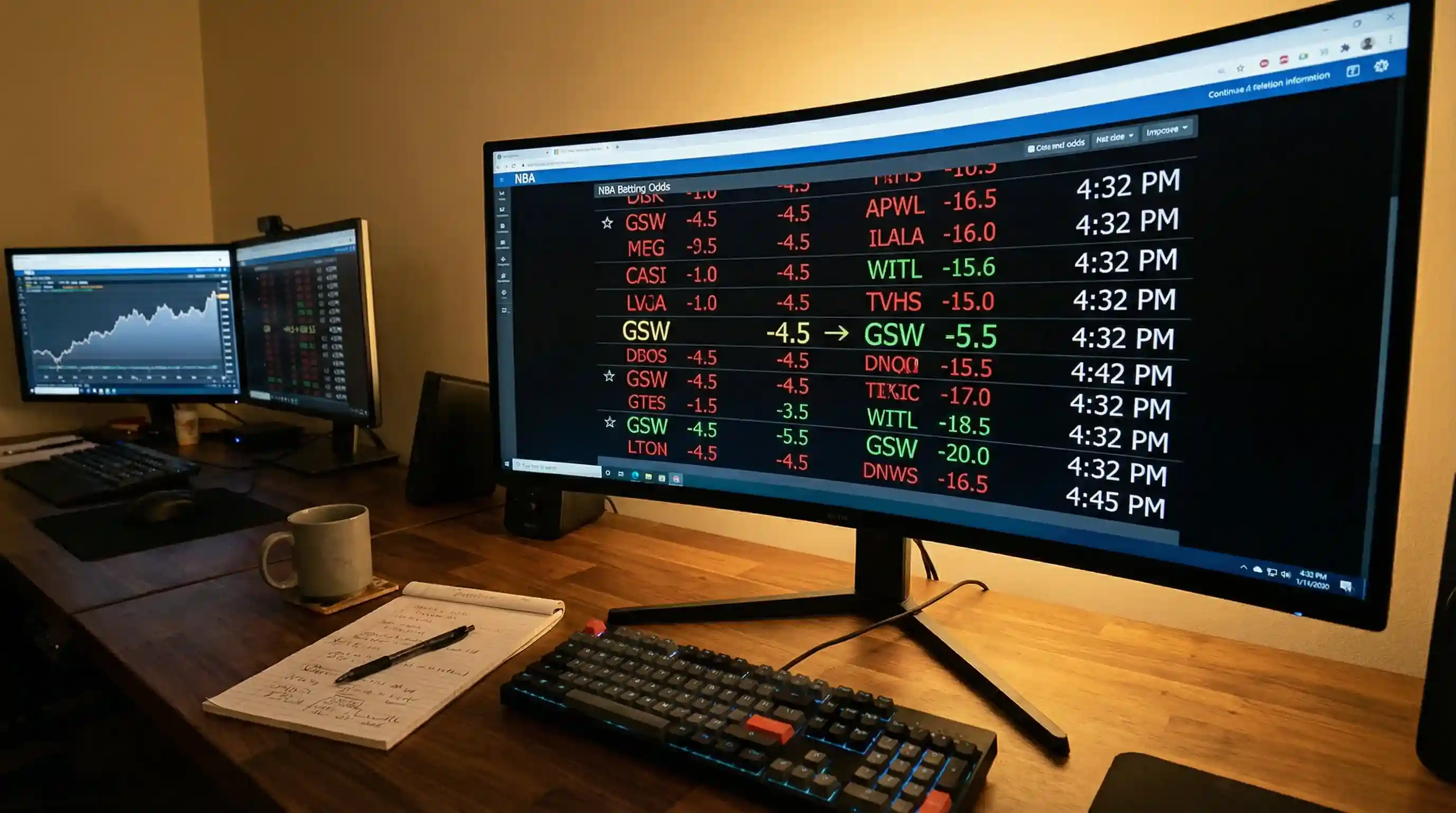
NBA Betting Chart: The Complete UK Guide to Reading Odds, Spreads and Trends
By NBA Betting Analyst
 Available in US
Three in the morning. I’m watching the Lakers close out a tight game against Boston, and my phone buzzes with a notification: the spread just moved half a point. That moment – catching live line movement while most of the UK sleeps – taught me something fundamental about NBA betting. The market never stops, the data flows constantly, and knowing how to read an NBA betting chart separates informed punters from those throwing darts blindfolded.
The UK gambling industry generated £16.8 billion in gross gaming yield through March 2025, growing 7.3% year-on-year. Nearly half of all UK gamblers – 47% to be precise – participate in sports betting, making it second only to the National Lottery in popularity. Football dominates domestic attention, but a growing number of UK bettors are discovering what I learned nine years ago: NBA markets offer something different. The pace of play, the statistical depth, the nightly schedule running from evening into the early hours – it all creates opportunities that football simply cannot match.
This guide breaks down everything you need to understand NBA betting charts from a UK perspective. We’ll work through odds formats that actually make sense to British bettors (decimal and fractional, not those confusing American numbers), explain how spreads and totals function differently than football handicaps, and dig into the ATS records and trend data that drive profitable decisions. Whether you’ve been betting on the Premier League for years or you’re completely new to sports wagering, by the end of this you’ll know exactly what each column on a betting chart means and how to extract genuine value from it.
I’ve structured this as a practical reference, not an academic exercise. We’ll start with the fundamentals – what a betting chart actually shows you – then move through each major market type before landing on strategy. The goal is that next time you pull up NBA odds on your laptop or mobile, every number tells you something useful.
Table of Contents
- Five Minutes to NBA Betting Literacy
- What Is an NBA Betting Chart and Why UK Bettors Need One
- Understanding Odds Formats: Decimal, Fractional and American
- NBA Spread Betting: How Point Handicaps Work
- Moneyline Betting: Picking Winners Without the Spread
- Totals Betting: Over/Under Points Explained
- Reading ATS Records: Finding Value in Spread Performance
- Home Court Advantage: How Location Affects NBA Lines
- Player Props: Individual Performance Markets
- NBA Futures: Championship and Award Markets
- Live Betting: In-Play NBA Markets
- UK Gambling Regulations for NBA Betting
- Building Your NBA Betting Strategy
- Frequently Asked Questions
Five Minutes to NBA Betting Literacy
- NBA betting charts display four core markets – spread, moneyline, totals, and ATS records – with UK bookmakers presenting odds in decimal format (1.91 for standard spread bets) rather than American (-110)
- Point spreads work like football handicaps but with higher numbers – a typical NBA spread of -6.5 gives the favourite a virtual deficit to overcome, while the underdog gets a head start
- Home court advantage averages roughly 3.0 points across the league, but team-specific edges vary wildly – Denver posts a +4.6 rating at altitude while some franchises show almost no home boost
- ATS records reveal which teams consistently beat or miss spreads regardless of winning outright – Oklahoma City covered 64% of their games between 2022 and 2025
- The standard commission on NBA bets runs approximately 4.5%, meaning you need to win about 52.4% of even-money wagers to break even over time
What Is an NBA Betting Chart and Why UK Bettors Need One
I spent my first month betting on basketball completely lost. Numbers everywhere, abbreviations that meant nothing to me, columns of data that might as well have been written in Mandarin. The turning point came when I finally understood that an NBA betting chart isn’t trying to confuse you – it’s actually a condensed dashboard of everything you need to make informed decisions.
An NBA betting chart organises the key information for each game into a standardised format. The UK sees roughly 290 million online bets placed monthly on real sporting events, and a significant portion of those punters would benefit enormously from understanding how to read these charts properly. At its core, a betting chart displays the teams playing, the scheduled tip-off time, and the odds for the three primary markets: spread (point handicap), moneyline (straight winner), and totals (combined points over/under).
Most betting charts also include a fourth crucial element: the ATS record. This shows how often each team has covered the spread this season, revealing patterns that raw win-loss records completely miss. A team sitting at 25-20 on the season might be 30-15 against the spread – that gap represents exploitable value.
The columns you’ll typically encounter include the rotation number (a reference identifier used by bookmakers), team names with home team listed second, the current spread with associated odds, the moneyline for each team, the game total, and occasionally the opening line for comparison against where it moved. Some charts add recent form indicators, injury notes, or public betting percentages showing where the money is flowing.
Betting Chart – A structured display presenting odds, spreads, totals, and historical performance data for upcoming NBA games in a single view, allowing bettors to compare markets and identify potential value without switching between multiple screens.
What separates a betting chart from a simple odds listing is the analytical layer. Live odds feeds show you current prices – that’s it. A proper betting chart contextualises those prices with ATS records, line movement (how the odds have shifted since opening), and often situational information like rest days or travel schedules. When I’m scanning games for the evening slate, the chart format lets me spot interesting situations in seconds rather than clicking through ten different pages.
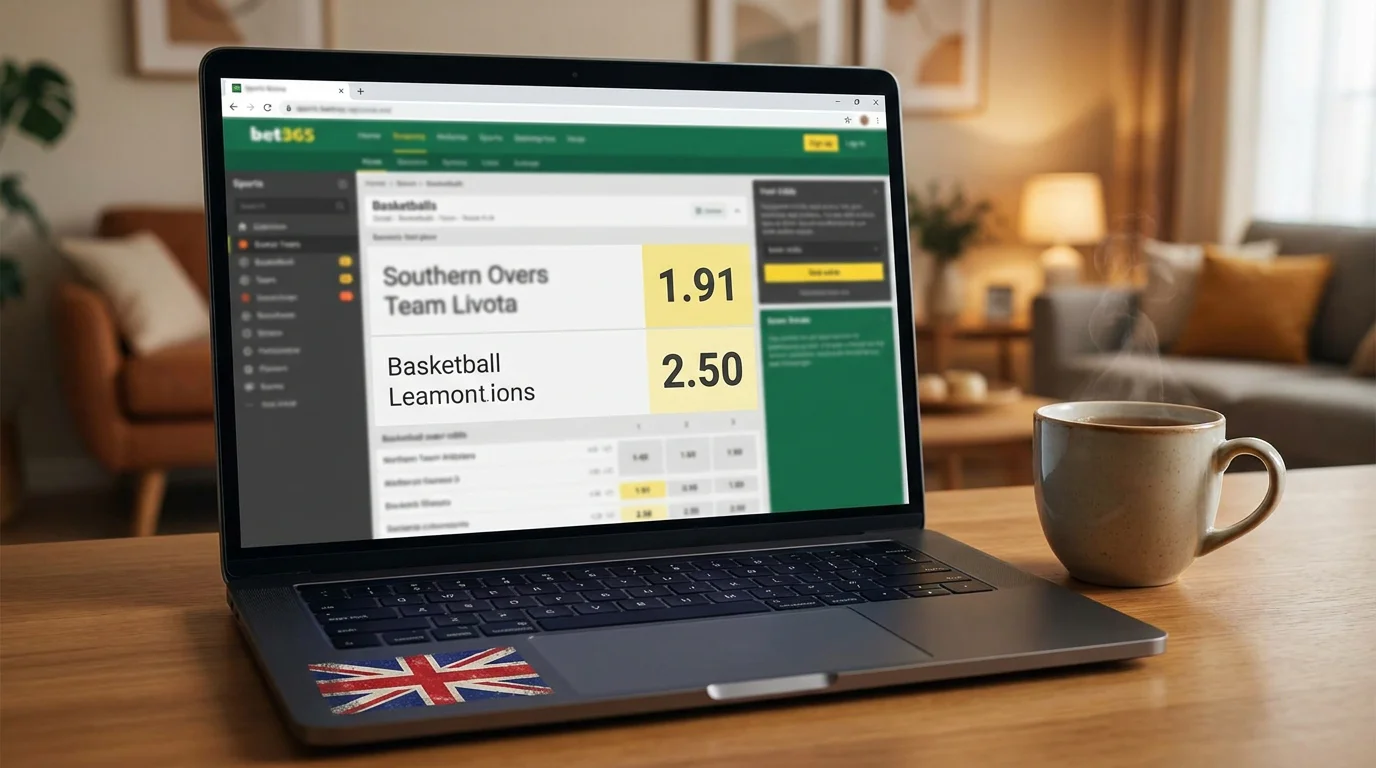
For UK bettors specifically, betting charts solve a format problem. American-centric sites default to displaying odds in that plus/minus moneyline format that takes time to parse. A chart built for British users converts everything to decimal odds automatically, meaning 1.91 instead of -110. The visual organisation also helps with pattern recognition over time – after using betting charts consistently for a few months, you start noticing how certain teams always seem priced too cheap as underdogs, how totals markets overshoot after high-scoring games, and how late line movement signals sharp money.
Understanding Odds Formats: Decimal, Fractional and American
The first time I tried to back the Celtics at -180, I genuinely thought I was getting 1.80 odds. I wasn’t. That minus sign and three-digit number meant something completely different, and I only discovered my error after the bet settled. American odds format trips up nearly every UK bettor initially, which is why understanding the conversion is non-negotiable before you place a single wager.
UK bookmakers predominantly display NBA odds in decimal format – the system you already know from football. A price of 1.91 means you get £1.91 back for every £1 staked, including your original stake. Simple multiplication tells you the potential return. Fractional odds (like 10/11) appear less frequently for NBA but work the same way they do for horse racing – the first number represents potential profit, the second your stake. American odds, however, require a mental gear shift because they express the same probabilities using a completely different logic.
The Same Probability Expressed Three Ways
| Format | Favourite (-6.5) | Underdog (+6.5) |
|---|---|---|
| American | -110 | -110 |
| Decimal | 1.91 | 1.91 |
| Fractional | 10/11 | 10/11 |
American odds work on a base of 100. Negative numbers (-110, -150, -300) indicate how much you must stake to win £100 profit. A -110 line requires a £110 bet to return £100 profit, plus your stake back. Positive numbers (+150, +250) flip this – they show how much profit a £100 stake would generate. So +150 means £100 returns £150 profit. The commission in NBA betting typically runs around 4.5%, which is why you see -110 on both sides of a spread rather than even money.
Converting American to Decimal
For negative American odds: Decimal = (100 / American odds) + 1
Example: -110 becomes (100 / 110) + 1 = 0.909 + 1 = 1.91
For positive American odds: Decimal = (American odds / 100) + 1
Example: +150 becomes (150 / 100) + 1 = 1.5 + 1 = 2.50
Once you’ve converted to decimal, calculating implied probability takes one more step. Divide 1 by the decimal odds and multiply by 100. Those 1.91 spread odds imply a 52.36% probability of either outcome occurring. When both sides of a spread show 1.91, the total implied probability exceeds 100% (104.72% in this case) – that excess represents the bookmaker’s edge, the vig, their guaranteed margin regardless of outcome.
Why This Matters for Value Betting
If you assess a team’s true probability of covering at 55% but the market prices them at 1.91 (implying 52.36%), you’ve identified positive expected value. The market is underestimating their chances by roughly 2.6 percentage points. Over hundreds of bets, that edge compounds. Without understanding how to move between formats and extract implied probabilities, you’re betting blind.
The practical approach: let your bookmaker do the conversion. Most UK-licensed operators display NBA odds in decimal by default or offer a simple toggle in account settings. The maths becomes second nature eventually – you’ll glance at 1.91 and instinctively know it implies about 52%, 2.00 means exactly 50%, and anything below 1.50 represents heavy favouritism. Stick with decimals for NBA – it’s cleaner, faster, and matches how you likely already think about football betting prices.

NBA Spread Betting: How Point Handicaps Work
My lightbulb moment with spreads came during a Lakers-Clippers game. The Lakers won by 4 points, the crowd celebrated, and my -5.5 Lakers bet lost. That’s when spread betting clicked for me – you’re not betting on who wins, you’re betting on whether a team can exceed expectations built into the line.
Point spreads in NBA function identically to handicap betting in football, just with larger numbers. When bookmakers set a spread of -6.5 on the Celtics against the Knicks, they’re handicapping Boston by 6.5 points. For your bet to win, Boston must win by 7 or more. The Knicks at +6.5 can lose by up to 6 points and your bet still cashes. The half-point exists specifically to eliminate push scenarios where neither side wins or loses.
Spread Betting Outcome Scenarios
Boston Celtics -6.5 vs New York Knicks +6.5
Final Score: Celtics 112, Knicks 104 (8-point margin)
Result: Celtics -6.5 wins (112 – 6.5 = 105.5, still beats 104)
Final Score: Celtics 108, Knicks 104 (4-point margin)
Result: Knicks +6.5 wins (104 + 6.5 = 110.5, beats 108)
NBA spreads typically range from 1 to 15 points depending on the perceived talent gap between teams. Unlike football where a 2-goal handicap feels enormous, basketball’s scoring frequency makes double-digit spreads routine. A -12.5 spread on a contender hosting a tanking team isn’t unusual. The key numbers to watch are 5, 6, and 7 – NBA games land on these margins more frequently than others due to the scoring mechanics (two-point baskets, three-pointers, and free throws combine predictably over 48 minutes).
Football Handicaps vs NBA Spreads
The fundamental concept is identical – giving one team a virtual advantage to level the betting field. But football handicaps of -1.5 goals represent rare blowouts, while NBA spreads of -1.5 points describe toss-up games. The psychological adjustment takes time. A 10-point NBA spread doesn’t signal the lopsided mismatch that a 3-goal football handicap does. Blowouts happen regularly in basketball; a 20-point fourth-quarter deficit gets erased far more often than a 3-0 football scoreline.
Home court advantage factors directly into spread calculations. Oddsmakers typically build approximately 3.0 points of home advantage into their lines – the visiting team faces a slightly steeper spread than neutral-site calculations would suggest. This figure comes from historical performance data showing home teams perform measurably better than their road performances.
For deeper analysis of spread betting mechanics and specific situations to exploit, the complete NBA spread betting guide breaks down when to back favourites versus underdogs, how line movement signals value, and which spread sizes offer the best historical returns.
The practical takeaway: spread betting removes the randomness of narrow wins from the equation. You don’t need to pick which team wins – you need to predict whether the winning margin exceeds market expectations. Sometimes a team losing by 5 points makes you money. Sometimes a team winning by 10 doesn’t. The spread reframes every game as a question of margin, not outcome, and that distinction opens up betting angles that moneyline markets simply cannot provide.
Moneyline Betting: Picking Winners Without the Spread
Sometimes basketball is simple. The better team wins, the game plays out exactly as expected, and complicated spread calculations feel unnecessary. That’s when moneyline betting earns its place in your portfolio – pure winner selection with odds that reflect each team’s probability of victory.
Moneyline bets strip away the handicapping layer entirely. You’re backing one team to win outright, regardless of margin. Home teams in NBA win approximately 60% of games historically, which explains why most home favourites show shorter moneyline prices than road teams. The challenge lies in determining when those odds actually represent value versus when you’re simply paying a premium for probability everyone already knows.
Moneyline Pricing for a Moderate Favourite
| Team | Spread | Moneyline (Decimal) | Implied Probability |
|---|---|---|---|
| Phoenix Suns | -5.5 | 1.40 | 71.4% |
| Utah Jazz | +5.5 | 3.00 | 33.3% |
The maths becomes stark with heavy favourites. If the Celtics are -12.5 against a bottom-tier opponent, their moneyline might sit at 1.10 or even lower. That means risking £100 to profit £10. The implied probability exceeds 90%, which sounds attractive until you remember that 10% of the time, you’re losing your entire stake for minimal upside. Single-game variance in basketball is high enough that massive favourites lose outright multiple times per season.
My general rule: moneyline betting works best in the middle range. When a favourite sits between 1.40 and 1.70 decimal odds, you’re paying a reasonable premium without exposing yourself to catastrophic risk-reward ratios. Underdogs priced between 2.20 and 3.50 offer enough upside to absorb losing runs while still representing plausible upset scenarios. The extremes – heavy favourites below 1.25 and massive underdogs above 5.00 – require either exceptional conviction or multi-bet strategies like parlays to make mathematical sense.
Moneyline also serves a specific situational purpose: late-game hedging. If you’ve backed a team on the spread and they’re leading by exactly the spread number with two minutes left, a moneyline bet on their opponent can guarantee profit regardless of outcome. For newcomers to NBA betting, I recommend starting with spreads rather than moneylines – the consistent 1.91 decimal juice creates more transparent comparisons, and the learning curve around margins of victory teaches you more about basketball dynamics than simply picking winners.
Totals Betting: Over/Under Points Explained
Warriors versus Kings, game total set at 234.5 points. I watched both teams trade baskets at a frantic pace for three quarters, sitting comfortably on my over bet with the score already at 190. Then the fourth quarter devolved into intentional fouls, turnovers, and clock-killing possessions. Final score: 228 combined. Six and a half points short. That night taught me that NBA totals betting requires understanding game dynamics as much as raw offensive firepower.
Totals markets ask a straightforward question: will the combined final score exceed or fall short of the bookmaker’s projected number? The over/under line has nothing to do with which team wins – a 130-110 blowout and a 120-120 overtime thriller both land at 240 combined points. Your analysis shifts entirely from team quality to pace, defensive efficiency, and situational factors that affect scoring environments.
Totals Calculation Example
Game Total Line: 227.5
Final Score: Miami 115–Atlanta 114
Combined Total: 229 points
Result: Over 227.5 wins
Final Score: Miami 108–Atlanta 106
Combined Total: 214 points
Result: Under 227.5 wins
NBA game totals typically range from around 210 for defensive matchups to 240+ when two high-powered offences meet. Modern basketball trends toward higher totals than previous decades due to pace increases and three-point shooting proliferation. When evaluating a total, I look at four primary factors: each team’s pace rating (possessions per game), their offensive and defensive efficiency (points per possession), recent scoring trends, and rest/travel situations.
That last factor matters more than many bettors realise. Research shows that 19% of NBA games are essentially decided in the fourth quarter, meaning fatigue and focus shifts dramatically affect late-game scoring. Back-to-back situations, cross-country travel, or altitude changes (particularly games in Denver) can swing totals by several points in either direction.
Totals betting rewards specialists. While spread handicapping requires understanding both teams’ relative quality, totals analysis can focus purely on scoring environments. Some bettors I know track nothing but pace metrics and rest schedules, ignoring spread markets entirely. The edge comes from recognising when a game total misprices the likely scoring output – whether that’s an over on two teams with leaky defences meeting after rest, or an under when grind-it-out franchises face each other on consecutive nights.
Reading ATS Records: Finding Value in Spread Performance
Every November, casual bettors pile onto whatever team currently leads the Western Conference standings. And every April, they wonder why backing winners didn’t translate to winning bets. The disconnect between straight-up records and betting profitability is precisely why ATS records exist – they reveal which teams actually beat expectations, not just opponents.
ATS stands for “against the spread,” measuring how often a team covers the point handicap regardless of game outcome. A team with a 45-37 win-loss record might sit at 52-30 ATS if they consistently exceed their projected margins. Conversely, a 50-32 powerhouse could be just 38-44 ATS if oddsmakers overvalue them week after week. The Oklahoma City Thunder demonstrated this beautifully between 2022 and 2025, compiling the league’s best ATS record at 69-39 – a 64% cover rate – while transitioning from rebuilding project to legitimate contender.
Sample ATS Records (2022-2025 Performance)
| Team | ATS Record | Cover % | Trend |
|---|---|---|---|
| Oklahoma City Thunder | 69-39 | 64% | Improving |
| Denver Nuggets | 58-50 | 54% | Steady |
| League Average | 50-58 | 46% | Baseline |
The critical threshold for ATS profitability sits at 52.4%. That’s the breakeven point when betting at standard -110 juice (1.91 decimal). Cover 52.4% of your spread bets and you’re precisely treading water after commission. Anything above generates profit; anything below bleeds money. A team covering 60%+ of their games represents genuine, sustained value – but such streaks rarely persist across multiple seasons. Markets adjust, lines tighten, and yesterday’s underpriced squad becomes tomorrow’s public darling.
ATS records split into home and away components revealing different patterns. A team might cover consistently at home where they receive less of a spread cushion while underperforming on the road where oddsmakers potentially undervalue travel fatigue. Always dig beneath the headline ATS number to understand situational performance.
How do you use ATS records practically? Understand their limitations first – past ATS performance doesn’t guarantee future results. But sustained trends do indicate systematic mispricing. I integrate ATS records as a filter rather than a foundation: if my analysis suggests backing a team and their ATS record supports that lean, I gain confidence. The numbers provide context, not conviction – but context matters when you’re processing dozens of games weekly.
For detailed breakdowns of situational ATS trends – home versus away splits, performance after wins versus losses, back-to-back impacts – the complete ATS trends analysis covers the statistical patterns that inform profitable angle identification.
The spread, the moneyline and the total on the same game are not three separate opinions. They are three views of one projected margin, and they have to agree. Type in the row from your chart and the decoder strips the vig out of each market, works out the true number hiding behind it, and tells you when the three numbers disagree — because when they do, one of them is wrong and that is where the value sits.
| Bet | Consensus | Fair odds | Your odds | Edge |
|---|
| Line | Favourite covers | Fair odds | Underdog covers | Fair odds |
|---|
How it works. NBA winning margins follow a normal distribution around the market’s projected number, with a standard deviation near 11.5 points that the decoder scales up or down with the game total. That single assumption ties the three markets together: the spread market fixes the projected margin directly, the moneyline fixes it through the probability that the margin clears zero, and the total fixes the scoring environment that sets the spread. Every price is de-vigged proportionally before it is used, and where you leave the second side of a market blank a 4.5% margin is assumed, matching standard 1.91 pricing. More on the underlying markets in the guides to NBA spread betting, ATS trends and home court advantage.
Estimates only. A model built from market prices tells you where a chart contradicts itself, not what will happen in the game. You need to win roughly 52.4% of spread bets at 1.91 just to break even. 18+ — please gamble responsibly. Free, confidential support at BeGambleAware.
Home Court Advantage: How Location Affects NBA Lines
Denver in January. Visiting teams arrive from sea level, spend a night at altitude, and then attempt to run an NBA offence with oxygen debt accumulating every possession. The Nuggets aren't just playing at home – they're playing in conditions that physiologically disadvantage opponents. That extreme example illustrates why home court advantage isn't a single number but a spectrum varying dramatically by franchise and circumstance.
League-wide averages peg NBA home court advantage at roughly 3.0 points according to established rating systems, though alternative calculations suggest it may have declined to around 2.08 points in recent seasons. Either figure gets baked directly into spread calculations. When oddsmakers set a line, they start with a neutral-site projection and then adjust based on venue. A team assessed as 4 points better than their opponent on neutral ground becomes -7 at home or -1 on the road, with that 3-point swing reflecting location value.
Team-Specific Home Court Ratings (2022-2025)
| Team | Home Performance Rating | Key Factor |
|---|---|---|
| Denver Nuggets | +4.6 points | Altitude (5,280 feet) |
| Miami Heat | +3.8 points | Arena atmosphere |
| League Average | +3.0 points | Baseline |
| Sacramento Kings | +2.1 points | Below average |
Denver's home court true performance rating of +4.6 points leads the league for good reason. The Mile High City sits at 5,280 feet elevation where oxygen concentration drops meaningfully from sea level. Visiting players fatigue faster, especially in transition, and late-game execution suffers. The Nuggets roster is acclimated; their opponents are struggling to breathe. That's not psychological – it's biochemistry providing a measurable betting edge.
Home teams in NBA win approximately 60% of games straight-up historically. That number fluctuates season to season but remains remarkably consistent over decades, validating the existence of genuine home advantage regardless of era, rule changes, or playing style evolution.
Beyond altitude, several factors drive home court value. Crowd energy affects officials (studies show slight bias in foul calls favouring home teams), travel fatigue accumulates for road squads, and familiarity with arena sight lines and shooting backgrounds provides marginal advantages. Some franchises cultivate intense home atmospheres that visibly affect opponents; others play in half-empty arenas where the home team might as well be on a neutral court.
For betting purposes, the key insight is recognising when markets overpay or underpay for home court. Not every home team deserves a 3-point bump. A bottom-tier franchise hosting a contender in a Tuesday night game with minimal fan attendance probably sees reduced home advantage. Playoff home court amplifies everything – the Golden State Warriors won roughly 80% of their home playoff games during their championship runs from 2013 onward, demonstrating how postseason intensity exceeds regular season patterns.

Player Props: Individual Performance Markets
LeBron James, career year 21, still listed at 26.5 points in a matchup against a team ranked 28th in perimeter defence. I bet the over without hesitation. Three minutes into the game, he tweaked his ankle and never returned. Props are both the most researchable and the most volatile market in NBA betting – individual brilliance or misfortune can swing outcomes regardless of your analysis quality.
Player prop markets allow betting on individual statistical outputs: points scored, rebounds grabbed, assists distributed, three-pointers made, and various combinations. UK bookmakers offer these markets with increasing depth, letting you back Jayson Tatum to exceed 8.5 rebounds or Tyrese Haliburton to dish out 10+ assists. The attraction is clear – you're betting on controllable individual performance rather than game outcomes influenced by both teams.
Common Player Prop Market Types
Points: Over/under on scoring output – the most liquid prop market with tightest lines
Rebounds: Total boards collected – heavily influenced by opponent pace and shooting accuracy
Assists: Dimes distributed – correlated with team shooting and game script (blowouts reduce minutes)
Threes Made: Long-range conversions – high variance due to shooting percentage fluctuation
Combos (PRA): Points + Rebounds + Assists combined – smoother variance but wider lines
The statistical research opportunities in props exceed other markets. Player usage rates, recent minute loads, opponent defensive rankings by position, pace matchups – all feed directly into prop projections in ways that game outcomes simply don't allow. When you know a centre averages 12 rebounds but faces a team allowing the league's highest opponent rebounding rate, the over becomes statistically justified regardless of who wins the game.
However, integrity concerns have emerged around certain prop markets. NBA Commissioner Adam Silver directly addressed this: "We've asked some of our partners to pull back some of the prop bets, especially when they're on two-way players, guys who don't have the same stake in the competition, where it's too easy to manipulate something, which seems otherwise small and inconsequential to the overall score." That comment acknowledges a real vulnerability – props on low-profile players create manipulation opportunities that game-level bets don't.
For UK bettors, props work best as supplements rather than foundations. The markets tend to be less efficient than spreads (creating more edge opportunities) but carry higher variance (meaning longer losing runs even with positive expected value). Start with main market props on star players where liquidity keeps lines sharp, then gradually explore secondary markets as you develop projection capabilities.
The complete player props guide details the statistical approach to prop analysis, covering which metrics matter most for each prop type and how to identify mispriced lines through matchup research.

NBA Futures: Championship and Award Markets
October 2023. I placed a championship futures bet on a team trading at 25.00 decimal odds that eventually made the conference finals. Even without winning the title, the position created hedging opportunities that locked in profit months before the playoffs concluded. Futures betting is a different discipline entirely – you're making long-term assessments with capital tied up for months while market conditions shift around you.
NBA futures markets cover championship winners, conference champions, division titles, regular season win totals, and individual awards like MVP, Rookie of the Year, and Defensive Player of the Year. Unlike nightly spread betting where results settle within hours, futures require patience. Your position might look brilliant or foolish for weeks before resolution, and the ability to hedge or cash out varies by bookmaker and market liquidity.
Academic research into NBA futures markets reveals persistent inefficiencies. Bettors systematically overvalue teams that performed well in the previous season while underrating improving squads. This recency bias creates opportunities for those willing to bet against recent memory in favour of underlying talent assessment.
The Woodland & Woodland study examining NBA season win totals put it directly: "Although the NBA season wins total market is slightly more efficient than the NFL, profitable betting strategies are still available for both the over and under bets. Individuals tend to overvalue a team's performance in the previous season." That finding maps onto my experience. Teams coming off disappointing seasons with intact rosters often offer value on win total overs, while championship hangover squads frequently disappoint relative to lofty expectations.
Championship futures follow a distinct pricing arc. Pre-season lines offer the widest odds because uncertainty runs highest – injuries haven't happened, chemistry hasn't developed, and narratives haven't formed. As the season progresses, prices contract on contenders and expand on pretenders. Locking in a position on an eventual champion at pre-season prices can generate significantly better returns than waiting until playoff seeding is set, though you accept the risk that injuries or dysfunction might sink your selection before it matters.
For UK bettors, futures represent a portfolio approach to NBA betting. Rather than grinding nightly spreads, you can take considered positions on season-long outcomes and check in periodically. The comprehensive futures betting guide covers timing strategies, hedging calculations, and specific situations where championship and award markets offer genuine value.
Live Betting: In-Play NBA Markets
Halftime. The Lakers trail by 14. The live spread shows them at +5.5 for the second half, implying bookmakers expect them to lose the remaining 24 minutes by about 5 points rather than mount a comeback. I've watched enough basketball to know 14-point halftime deficits evaporate regularly – and I've also watched them balloon to 30. Live betting is where game feel meets mathematical opportunity, for better and worse.
The in-play market has exploded globally. Live betting now accounts for 62.35% of the US online sports wagering market with projected compound annual growth exceeding 13% through 2031. NBA games suit live betting particularly well because scoring happens constantly, momentum shifts visibly, and the quarter structure creates natural reset points for odds recalibration. Every possession generates new information that algorithms process into updated lines.
Time Zone Reality for UK Bettors
Most NBA games tip off between midnight and 4am UK time. Live betting requires active attention throughout the contest – that means late nights or early mornings. Consider whether the edge you're chasing justifies disrupted sleep patterns. Many UK punters find pre-game betting more sustainable than chasing live opportunities in the small hours.
NBA game dynamics create specific live betting patterns worth understanding. Roughly 19% of games are essentially decided in the fourth quarter, meaning leads built through three periods can evaporate or extend dramatically in the final 12 minutes. Teams trail by 10 entering the fourth regularly and win outright. Conversely, 15-point leads with five minutes remaining feel secure but provide surprisingly short live moneyline odds because collapses do happen.
The challenge with live NBA betting is speed. Lines move constantly as scores change, and the odds you see might shift before your bet confirms. Sharp live bettors work from their own models, pre-calculating where they'd have value at various score scenarios, then executing rapidly when those scenarios materialise.
For UK bettors willing to navigate the time zone complications, the live betting strategy guide covers quarter-by-quarter tactical approaches and risk management specifically designed for in-play wagering. The opportunity exists, but so does the potential for impulsive decision-making at 3am when your judgement isn't sharpest.
UK Gambling Regulations for NBA Betting
Walking into a licensed betting shop on any UK high street, you can place an NBA bet without paperwork, age verification beyond looking plausibly adult, or questions about your qualifications. Online, the process requires account registration and identity verification, but accessing American basketball markets from Britain remains entirely legal and straightforward. The UK Gambling Commission provides one of the most regulated environments globally – which cuts both ways for bettors.
The UK currently operates with 2,179 licensed gambling operators as of March 2025, a figure that actually declined 3.7% from the previous year as consolidation and regulatory pressure reshape the industry. Every bookmaker offering NBA markets to UK residents must hold appropriate UKGC licensing, ensuring baseline consumer protections including segregated funds, dispute resolution processes, and responsible gambling tools. The regulatory infrastructure that governs Premier League betting applies identically to NBA wagering.
Protected Environment
UK licensing means your funds are protected, your bets are enforceable, and operators must adhere to advertising standards. If a bookmaker refuses to pay a legitimate NBA winning bet, you have regulatory recourse. That protection doesn't exist when using offshore, unlicensed operators – stick with UKGC-licensed bookmakers for NBA betting.
NBA Commissioner Adam Silver has spoken extensively about how regulation benefits betting integrity: "With this regulated structure of legalized betting, we can monitor it in ways that were unimaginable years ago. If there's any aberrational behavior: People betting large numbers who hadn't historically done so, just opening an account to place bets, or even the geotargeting, we know exactly where bets are being placed." That monitoring extends to UK markets through data sharing between sports leagues and gambling regulators.
Only 0.5% of UK gamblers classify as problem gamblers according to Gambling Commission data. While that percentage sounds small, it represents real individuals experiencing harm. Reputable UK bookmakers must provide deposit limits, loss limits, session time reminders, self-exclusion options, and links to support services like GambleAware.
Practically speaking, UK-specific regulations affect your NBA betting in several ways. Bonus restrictions limit certain promotional offers, stake limits may apply to some bet types, and verification requirements can delay withdrawals initially. The regulatory approach in Britain differs substantially from the US patchwork where state-by-state legalisation creates inconsistent rules. UK bettors access NBA markets through a single, unified framework regardless of where in the country they live – that consistency simplifies things enormously.
Building Your NBA Betting Strategy
Nine years of NBA betting taught me one uncomfortable truth: the lines are really good. Carnegie Mellon research characterised Vegas oddsmakers' NBA lines as "very accurate" – and my early losses confirmed that assessment painfully. Beating the market consistently requires either information advantages, analytical edges, or the discipline to exploit narrow inefficiencies over very large sample sizes. No strategy works immediately; all require refinement and patience.
Start by acknowledging what you're up against. Professional oddsmakers access extensive data, sophisticated models, and real-time information flows. They've been refining NBA pricing for decades. The spread you see represents their best estimate after accounting for team quality, home court, injuries, rest, travel, and dozens of other factors. Finding consistent value means identifying where their estimates systematically miss – not where they occasionally get single games wrong.
Specialisation beats generalisation. Rather than betting every game on the slate, develop deep expertise in specific areas: one conference, particular situational angles (back-to-backs, rest advantages), or market types (totals, player props). Narrow focus allows deeper pattern recognition and better intuition development than surface-level analysis across all 30 teams.
Record keeping separates serious bettors from recreational punters. Track every bet with the closing line (the final odds before tip-off), not just results. Over time, your records reveal whether you're consistently beating closing lines – the strongest indicator of sustainable edge. If you're getting +6.5 on teams that close at +5.5, you're capturing value even when individual bets lose. If you're taking -7 on teams that close at -6, you're systematically buying bad numbers.
Value identification follows a straightforward process. First, develop your own assessment of a game's likely margin. Second, compare that assessment to the available spread. Third, bet only when discrepancy exceeds your required threshold (typically 1-2 points). Fourth, accept that individual outcomes mean nothing – variance will hand you wins on bad bets and losses on good ones. The process matters; the results follow over hundreds of wagers.
Bankroll management protects against inevitable losing streaks. Flat staking (consistent bet sizes) or percentage staking (proportional to current bankroll) both work. What doesn't work is increasing stakes to chase losses or decreasing them after wins. I recommend starting with spread betting on games where you have specific reasoning – rest advantage, matchup-specific factors, market overreaction to recent results. "I like the Celtics tonight" isn't analysis; it's preference. Build habits around structured evaluation, and strategy emerges from accumulated pattern recognition.

Frequently Asked Questions
What does the spread mean in NBA betting?
The spread represents a point handicap applied to balance betting action between teams. When you see Boston Celtics -6.5, Boston must win by 7 or more points for a spread bet to pay out. The opposing team at +6.5 can lose by up to 6 points and still cover. The half-point ensures a decisive result with no pushes.
How do NBA betting odds work in the UK?
UK bookmakers display NBA odds in decimal format. A price of 1.91 means a £10 stake returns £19.10 total. American odds use positive and negative numbers – a -110 line equals 1.91 decimal, while +150 equals 2.50 decimal. Most UK operators default to decimal for straightforward comparison.
What does against the spread mean for NBA bets?
Against the spread (ATS) measures betting outcomes relative to the point handicap rather than outright results. A team's ATS record shows how often they've covered spreads. A team might win 50 games but only cover 40 spreads if they frequently win by narrow margins. ATS records reveal value that raw win-loss records hide.
How do I read an NBA betting chart?
NBA betting charts organise game information into columns: team names, spreads with odds, moneylines, totals, and often ATS records. Home teams typically appear second. Negative spread numbers indicate favourites, positive indicate underdogs. Reading across a row gives complete market information for a single game.
Can UK residents legally bet on NBA games?
Yes, NBA betting is fully legal for UK residents through UKGC-licensed operators. The same regulatory framework governing Premier League betting applies to American basketball. Stick with licensed bookmakers to ensure consumer protections including fund segregation and dispute resolution.
What is the vig in NBA betting?
The vig (vigorish) is the bookmaker's built-in margin. Standard NBA spread bets price both sides at 1.91 decimal rather than 2.00 even money, creating roughly 4.5% commission. You need to win approximately 52.4% of spread bets to break even after accounting for this margin.
When do NBA betting lines open?
Opening lines typically release the morning after the previous night's games, usually between midday and early afternoon UK time. Lines move throughout the day based on betting action and injury news. Futures markets open during the off-season around draft time in June.
Created by the ”nba Betting Chart” editorial team.